
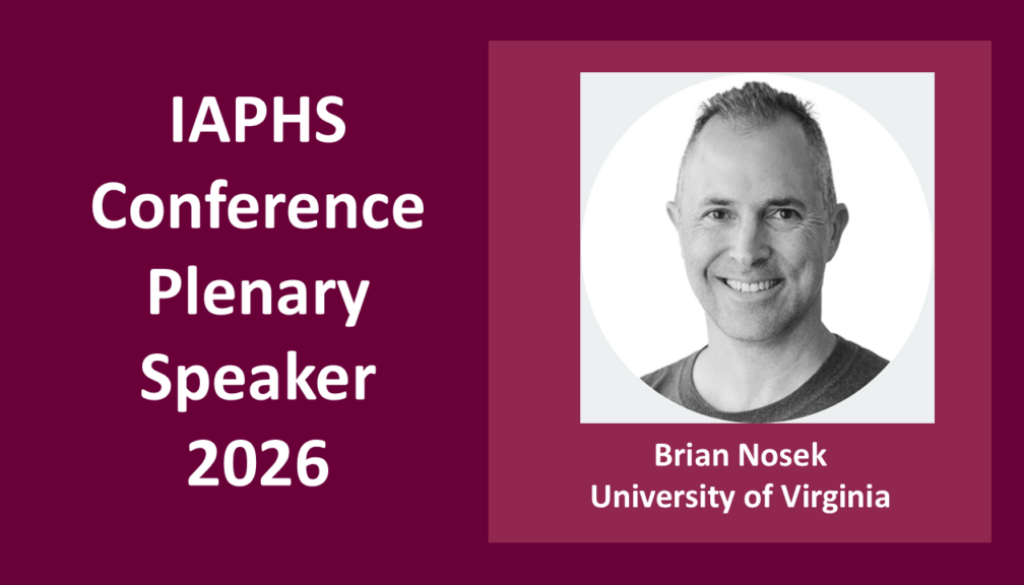
Conference Preview: Brian Nosek on Improving Scientific Transparency and Rewarding the Process
Claire Altman
Our IAPHS Blog Editor interviewed Brian Nosek about the IAPHS Conference September 29-October 2, 2026, in Portland, Oregon. Brian is a plenary speaker along with Sandro Galea and Cory Jane Clark. Their topic: “Research for Impact: New approaches to production and publication.”
Claire: Why did you agree to present at IAPHS this year?
Brian: I was invited, and the topic — reimagining how we conduct, report, and evaluate research — is something I care deeply about. Many current practices are rooted in a “paper era,” and we now have opportunities to innovate in a digital world.
Claire: Why should people attend your talk? What’s the main focus?
Brian: I focus on the gap between our scientific values and our actual practices — what we say we value versus what we do. My work examines why that gap exists and how we can close it, particularly through improving transparency and research practices.
Claire: Can you give an example of that gap?
Brian: Transparency is widely valued, but not consistently practiced. For example, journals often don’t require sharing data or code, even though access to those materials is essential for evaluating research credibility.
Claire: How does this apply to population health researchers?
Brian: Population health deals with complex systems and often limited data, making strong inference difficult. In such contexts, it’s especially important to openly communicate uncertainty and reward rigorous, transparent work—even when conclusions aren’t definitive.
Claire: It sounds like you’re advocating for changing academic incentives?
Brian: Exactly. Right now, the system rewards publication outcomes—especially novel, clean, positive results. Instead, we should reward the process: rigor, transparency, and honesty about uncertainty.
Claire: What does that look like in practice?
Brian: I advocate for “lifecycle open science,” where everything is shared: research plans, data, code, and results (positive or negative). This creates a complete and unbiased record and ensures researchers get credit for all aspects of their work.
Claire: What excites you about attending IAPHS?
Brian: I enjoy engaging with research communities outside my own field. I’m looking forward to learning how these challenges play out in population health and what insights I can gain from that community.
Registration is OPEN. Click Here to Register Today!
Note: This conversation was summarized with the help of AI.

All comments will be reviewed and posted if substantive and of general interest to IAPHS readers.